





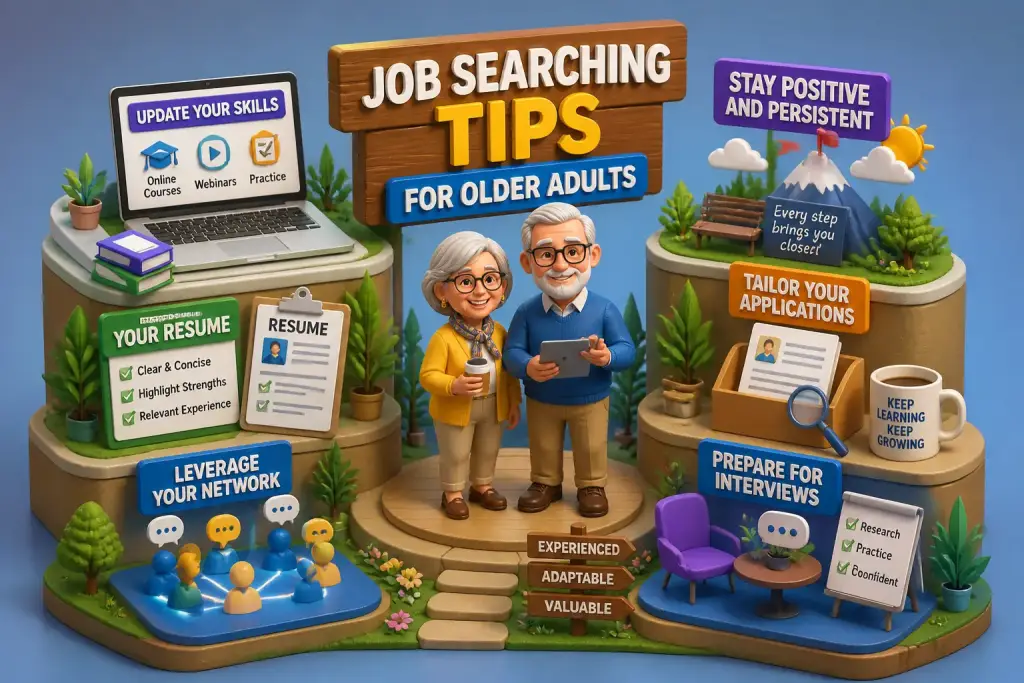
Table of Contents
Embrace a Positive Mindset
Job searching can be challenging, especially for older adults. It’s essential to maintain a positive mindset. Self-doubt may creep in, but your experience is valuable. Focus on your skills and how they can benefit potential employers. Remember, many companies value the reliability and experience that older workers bring.
- Tailor your resume to highlight relevant experience and skills.
- Leverage online platforms for networking and job opportunities.
- Stay updated on industry trends to remain competitive.
Start your journey by acknowledging your strengths. Reflect on your past achievements and how they contribute to your professional identity. Write these down to remind yourself of your capabilities. This practice can boost your confidence and help you present yourself more effectively during interviews.
Additionally, surrounding yourself with supportive friends and family can create a positive environment. They can provide encouragement and constructive feedback. Seek out groups or workshops that focus on career development for older adults. These can offer motivation and practical advice.
Update Your Resume and Cover Letter
Your resume and cover letter are often the first impressions potential employers will have of you. Ensure these documents reflect your most current skills and experiences. Tailoring your resume for each job application is important. Highlight the skills and experiences that are most relevant to the position.
Include keywords from the job description to help your resume pass through Applicant Tracking Systems (ATS). These systems filter resumes before they reach hiring managers. Use a clean, professional format. Avoid overly complex designs that can distract from your accomplishments.
Essential Elements to Include
- Contact Information: Keep it updated with current phone numbers and email addresses.
- Professional Summary: Write a brief statement summarizing your experience and skills.
- Key Skills: List relevant skills that align with the job you’re applying for.
- Work Experience: Include your most recent jobs, focusing on accomplishments rather than just duties.
- Education: Mention relevant degrees or certifications.
Don’t forget to personalize your cover letter. Address it to a specific person if possible, and explain why you are a good fit for the role.
Leverage Online Resources
Online job boards and networking sites are invaluable tools for job seekers today. Websites like LinkedIn, Indeed, and Glassdoor offer extensive listings and resources. Create an engaging LinkedIn profile that showcases your skills and experience. Connect with former colleagues and join industry-related groups to expand your network.
Utilize job search engines effectively. Set up alerts for positions that match your skills and interests. Many job boards allow you to filter searches based on age-friendly companies, which can be helpful. Make sure to regularly check these platforms and apply promptly.
Networking Through Social Media
Social media is not just for personal use; it can also be beneficial for networking. Follow companies you are interested in and engage with their posts. Share articles or insights related to your field. This can help you get noticed by potential employers. Additionally, consider joining Facebook groups that focus on job searching for older adults.
Prepare for Interviews
Interviews can be daunting, but preparation is key. Research the company, its culture, and the job role thoroughly. Prepare answers to common interview questions, especially those related to your experience and how it relates to the job. Practice your responses with a friend or family member to build confidence.
Because age can sometimes be a concern for employers, be ready to address it positively. Emphasize your adaptability and willingness to learn new technologies. Companies value employees who can grow and evolve with their roles. Highlight your work ethic and commitment to success.
Questions to Ask Employers
Prepare thoughtful questions to ask the interviewer. This shows your interest in the position and the organization. Here are a few examples:
- What are the biggest challenges facing your team right now?
- How do you support employee development and growth?
- What is the company culture like?
Consider Remote and Flexible Opportunities
The job market has shifted significantly, with many companies now offering remote work options. This can be a great advantage for older adults who may prefer flexibility. Explore remote job boards like We Work Remotely or Remote.co to find positions that suit your skills.
Flexible opportunities allow you to balance work with personal responsibilities. Many industries are open to part-time or contract work as well. Consider roles that allow you to use your expertise without the demands of a full-time job. This can also be a way to gradually re-enter the workforce.
Consider volunteering or part-time work to gain new skills and expand your network while searching for a full-time position.
Stay Updated on Technology
Today’s job market increasingly relies on technology. Familiarity with modern tools and software can set you apart from other candidates. Take the time to learn new programs relevant to your field. Online courses and tutorials can help you gain these skills without a significant time investment.
Consider platforms like Coursera or Udemy for affordable courses. Many libraries also offer free workshops on various technology topics. Staying current with industry trends can make you more attractive to employers. It demonstrates that you are proactive and willing to adapt.
Essential Tech Skills to Consider
- Basic computer skills: Proficiency in software like Microsoft Office.
- Social media tools: Understanding how to use platforms for marketing or networking.
- Project management software: Familiarity with tools like Trello or Asana can be advantageous.
Utilize Local Resources
Many communities offer resources specifically for older job seekers. Local career centers often provide workshops, resume help, and job listings. These centers can also connect you with employers who value experience. Look for job fairs that cater to older adults; these events can provide valuable networking opportunities.
Networking with local organizations can also yield job leads. Attend community events or workshops to meet others in your field. Volunteering can also be a great way to gain experience and meet people who can help you find job leads.
Engage with Mentorship Programs
Mentorship programs pair you with professionals who can provide guidance in your job search. These relationships can offer insights into industry trends and help you refine your approach. Many organizations offer mentorship opportunities, so explore local or online options.
Be Open to Change
Flexibility is vital in today’s job market. Older adults may need to consider roles outside their previous experiences. This might involve exploring different industries or job types. Being open to change can lead to unexpected opportunities and personal growth.
Consider roles that utilize your transferable skills. Skills such as communication, leadership, and problem-solving are valuable across various fields. Identifying these can help you pivot smoothly into new roles. Do not hesitate to apply for positions that may seem outside your comfort zone.
Recognizing Transferable Skills
Take a moment to list your skills and experiences. Analyze how they can apply to new positions. For instance, if you have experience in customer service, you may find roles in sales or marketing compelling. This approach broadens your job search and opens new avenues.
Long-Term Maintenance Tips
Once you secure a job, continuing to build your skills is essential. Attend workshops and training programs to stay relevant. Networking should also be an ongoing process. Continue to connect with professionals in your field, even after landing a job. These relationships can lead to future opportunities.
Consider setting personal career goals. Whether it is gaining a new certification or moving into a leadership role, having clear objectives can keep you motivated. Reassess these goals regularly to adapt to your evolving career aspirations.
Lastly, do not forget to take care of your well-being. Job searching can be stressful, so make time for activities that relax and rejuvenate you. Balancing your job search with self-care can lead to better outcomes and a healthier mindset.

Davide Esposito
Founder & Editor-in-ChiefBorn and raised in Italy, h4sus is the founder and lead editor of Success Path, combining strategic analysis and real-world case studies with practical career paths strategies to help readers make informed everyday decisions.