


Table of Contents
- Why Short Mindfulness Breaks Matter
- What Are Mindfulness Breaks?
- How to Incorporate Mindfulness Breaks into Your Day
- Breathing Exercises for Quick Mindfulness
- Mindful Observation: Engaging Your Senses
- Guided Mindfulness Meditations
- The Power of Gratitude in Mindfulness
- Physical Movement as Mindfulness
- Creating a Mindful Space
- Mindfulness and Technology: Finding Balance
- Long-Term Benefits of Mindfulness Breaks
- Common Mistakes to Avoid
- Where to Find Resources for Mindfulness
Why Short Mindfulness Breaks Matter
Short mindfulness breaks significantly improve mental clarity and emotional stability. In our fast-paced world, it is easy to feel overwhelmed. Regular breaks help rejuvenate the mind and body, allowing for better decision-making and increased productivity. These moments of stillness can help you step back from stressful situations and return with a fresh perspective.
- Short mindfulness breaks can enhance focus and reduce stress.
- Incorporating breathing exercises can be done anywhere, anytime.
- Even a few minutes of mindfulness can improve overall well-being.
Research indicates that even brief pauses dedicated to mindfulness can reduce anxiety and enhance focus. When you allow your mind to rest, it can process information better. This is especially important for those juggling multiple responsibilities or facing tight deadlines.
Incorporating short mindfulness breaks into your daily routine can be simple. You do not need a lot of time. Just a few minutes can make a significant difference in your day-to-day life.
What Are Mindfulness Breaks?
Mindfulness breaks involve taking a few moments to engage in practices that promote awareness and presence. These breaks can consist of various techniques, including breathing exercises, meditation, or simple moments of observation. The goal is to shift your focus away from distractions and center your thoughts.
During a mindfulness break, you might focus on your breath, observe your surroundings, or practice gratitude. These activities help to ground you in the present moment. They allow your mind to relax and reset. Mindfulness breaks can be done anywhere, whether in an office, at home, or outdoors.
Because they can be so adaptable, mindfulness breaks become a personal practice. You can customize them to fit your needs and preferences, making them effective for anyone, regardless of their experience with mindfulness.
How to Incorporate Mindfulness Breaks into Your Day
Incorporating mindfulness breaks into your day starts with intention. Set aside specific times to practice, whether it is during a lunch hour, after a meeting, or even while commuting. The key is consistency.
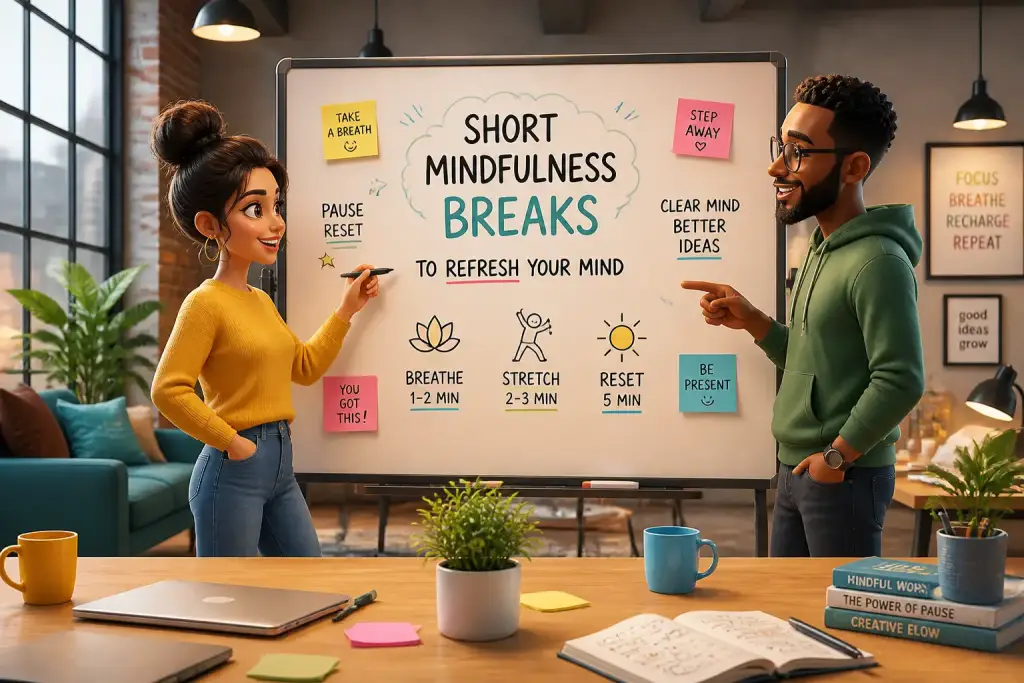
Begin by scheduling a few short breaks, lasting 3 to 5 minutes. You can gradually increase the duration as you become more comfortable with the practice. Here are some suggestions for incorporating these breaks:
- Set reminders on your phone to take breaks.
- Use a mindfulness app that prompts you for breaks.
- Pair breaks with routine activities, like after finishing a task.
Finding a quiet place helps too. When possible, choose a location that minimizes distractions. This might be a corner of your office or a peaceful spot outdoors. Create a routine that signals to your brain that it is time to relax.
Breathing Exercises for Quick Mindfulness
Breathing exercises are one of the simplest and most effective mindfulness techniques. They can be done anywhere and require no special equipment. These exercises help bring your attention to the present and calm your mind.
One popular technique is the 4-7-8 breathing method. Here’s how it works:
- Inhale through your nose for 4 seconds.
- Hold your breath for 7 seconds.
- Exhale slowly through your mouth for 8 seconds.
Repeat this cycle 4 to 5 times. This exercise helps reduce stress and promotes relaxation. Another effective method is deep abdominal breathing, where you focus on expanding your belly as you breathe in and out. Both techniques can be done in just a few minutes, making them ideal for quick breaks.
Set a timer for your breaks to ensure you stick to mindful moments throughout your day.
Mindful Observation: Engaging Your Senses
Mindful observation involves focusing on your surroundings using your senses. This practice can be particularly refreshing because it encourages you to engage fully with the present moment. Take a few minutes to observe what is around you. Notice the colors, shapes, and sounds.
For example, if you are outside, listen to the birds, feel the breeze, and observe the clouds. If you are indoors, pay attention to objects in the room. You might notice details you have overlooked before. This practice encourages awareness and curiosity, helping to clear your mind from racing thoughts.
To practice mindful observation, follow these steps:
- Choose an object or scene to focus on.
- Take a few deep breaths to center yourself.
- Allow your gaze to soften and observe without judgment.
Guided Mindfulness Meditations
Guided mindfulness meditations are excellent tools for those new to mindfulness. They provide structure and direction, making the practice more accessible. Many apps and websites offer free or low-cost guided sessions.
These meditations typically range from 5 to 20 minutes. You can choose a session that fits your available time. During a guided meditation, a narrator leads you through relaxation exercises and prompts you to focus on your breath or sensations in your body.
Some popular apps include Headspace, Calm, and Insight Timer. These platforms offer a variety of meditations tailored to different needs, such as stress relief or improved focus. Explore different styles to find what resonates with you.
The Power of Gratitude in Mindfulness
Practicing gratitude is a powerful way to enhance mindfulness. Taking time to acknowledge what you are grateful for shifts your focus away from negativity. This practice can significantly improve your overall mindset and well-being.
Use short breaks to reflect on three things you appreciate in your life. They could be as simple as enjoying a hot cup of coffee or having a supportive friend. This exercise can be done in less than five minutes and fosters a positive outlook.
Consider keeping a gratitude journal. Write down your thoughts regularly. This habit will not only reinforce your feelings of gratitude but also encourage mindfulness throughout the day. Over time, you will notice a shift in your perspective.
Physical Movement as Mindfulness
Incorporating physical movement into your mindfulness practice can be refreshing. Gentle stretching or walking can help release tension and refocus your mind. Movement encourages blood flow and increases alertness.
Try taking a short walk outside or around your office. As you walk, focus on each step. Feel the ground beneath your feet and the rhythm of your breath. This simple act can clear your mind and provide a new burst of energy.
If you prefer indoor activities, consider a few minutes of stretching. Focus on your body as you stretch. Notice how each muscle feels. This practice can help ground you and improve your physical well-being.
Creating a Mindful Space
Designing a mindful space can enhance your practice. Choose a specific area for your mindfulness breaks. It should feel comfortable and calming. You might want to include elements that inspire tranquility, such as plants, soft lighting, or comfortable seating.
Keep this space organized and free from distractions. A clean environment can promote a clearer mind. Consider adding personal items that bring you joy, like photographs or artwork. These elements can enhance your feelings of comfort and peace.
Whenever you take a break, use this space to engage in mindfulness practices. Associating a specific area with relaxation can help signal your brain that it is time to unwind.
Mindfulness and Technology: Finding Balance
In today’s digital age, technology can be both a helpful tool and a source of distraction. While devices can provide access to mindfulness resources, they can also lead to interruptions. Finding a balance is essential.
Use apps wisely. Set specific times for checking notifications and engaging with technology. When taking mindfulness breaks, consider putting your phone away. This helps create a true disconnect from distractions.
Alternatively, leverage technology to enhance your mindfulness practice. Use apps to remind you of breaks or to guide you through meditation. Many apps offer features that promote mindfulness without overwhelming you.
Long-Term Benefits of Mindfulness Breaks
The long-term benefits of regular mindfulness breaks are significant. Over time, these practices can lead to reduced stress, improved focus, and a greater sense of well-being. Regularly engaging in mindfulness can enhance emotional resilience, helping you manage challenges more effectively.
Studies show that individuals who practice mindfulness consistently report higher levels of happiness and life satisfaction. They also display lower levels of anxiety and depression. By incorporating short mindfulness breaks into your daily life, you are investing in your mental health.
As you continue this practice, you may find that it becomes a natural part of your routine. You will likely notice a shift in your overall perspective and response to stressors. Embrace the journey of mindfulness and its many rewards.
Common Mistakes to Avoid
As you begin your mindfulness journey, it is important to be aware of common pitfalls. Many people expect immediate results and become discouraged. Remember, mindfulness is a practice that takes time to develop.
Avoid comparing your experience to others. Everyone’s journey is unique. Focus on your progress and the improvements you experience over time. Additionally, do not underestimate the power of small moments. Even brief pauses can provide significant benefits.
Lastly, be patient with yourself. If you find your mind wandering during practice, that is perfectly normal. Gently guide your focus back to the present without judgment. Mindfulness is about acceptance and self-compassion.
Where to Find Resources for Mindfulness
Many resources are available to support your mindfulness practice. Books, podcasts, and websites offer valuable insights and guidance. Consider exploring different mediums to find what resonates with you.
Local community centers may offer mindfulness classes or workshops. These can provide a supportive environment for learning and practicing. Online courses also provide flexible options for those with busy schedules.
For a digital approach, numerous apps are designed for mindfulness. Explore options like Headspace, Calm, and Insight Timer. Each provides unique features that cater to different preferences and goals.

Davide Esposito
Founder & Editor-in-ChiefBorn and raised in Italy, Davide Esposito is the founder and lead editor of Success Mindfulness, combining hands-on research with practical mindful leadership strategies to help readers make informed everyday decisions.