



Table of Contents
- Why Mindfulness Matters for Executives
- Common Misconceptions About Mindfulness
- Simple Mindfulness Techniques for Executives
- Creating a Mindful Work Environment
- Mindfulness and Decision-Making
- Mindfulness for Stress Reduction
- The Role of Technology in Mindfulness
- Measuring the Impact of Mindfulness
- Overcoming Barriers to Mindfulness
- Long-Term Maintenance Tips
Why Mindfulness Matters for Executives
Mindfulness plays a critical role in today’s fast-paced work environment. Executives often face intense pressure, leading to stress and burnout. Practicing mindfulness can help manage this pressure effectively. By being present and fully engaged in each moment, leaders can make better decisions and foster a more productive work atmosphere. This practice not only enhances personal well-being but also positively influences team dynamics.
- Mindfulness improves focus and decision-making for executives.
- Simple mindfulness practices can reduce workplace stress effectively.
- Creating a mindful workplace culture enhances team collaboration.
The benefits of mindfulness extend beyond individual health. When executives model mindfulness, they inspire their teams to adopt similar practices. This can create a ripple effect throughout the organization, improving overall morale and productivity. Fostering a culture of mindfulness can lead to innovative ideas and solutions, as employees feel more empowered to express themselves freely.
Stress management is essential for maintaining focus and clarity. Mindfulness techniques provide tools that help executives step back and gain perspective. Practicing mindfulness regularly can improve emotional intelligence, making it easier to handle conflicts and challenges. Overall, integrating mindfulness into the workplace is important for success in 2026 and beyond.
Common Misconceptions About Mindfulness
Many people misunderstand mindfulness, associating it solely with meditation or relaxation. While these elements are part of mindfulness, the practice encompasses much more. Mindfulness is about awareness and being present in the moment. It’s not just about sitting quietly; it’s about actively engaging with your thoughts and feelings.
Another misconception is that mindfulness requires a significant time commitment. In reality, even short mindfulness exercises can be highly effective. Even just a few minutes of focused breathing can bring clarity and calm. Executives often believe they do not have time for mindfulness, but integrating it into daily routines can be done seamlessly.
Lastly, some think mindfulness is only beneficial for personal well-being. However, it dramatically impacts workplace productivity and collaboration. When leaders practice mindfulness, they can enhance their ability to lead effectively. This practice builds resilience, enabling executives to handle stress and challenges more efficiently.
Simple Mindfulness Techniques for Executives
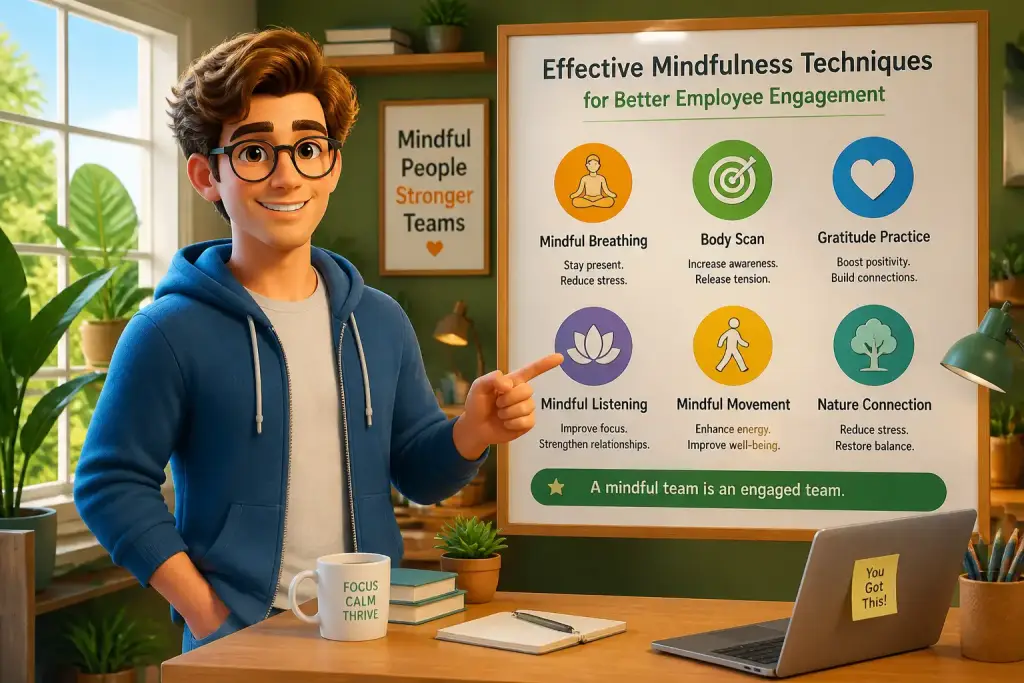
Incorporating mindfulness into daily routines doesn’t need to be complicated. Here are some simple techniques that executives can practice at work:
- Breath Awareness: Take a few minutes to focus on your breath. Inhale deeply through your nose, hold for a moment, and exhale slowly through your mouth.
- Mindful Walking: Take short walks during breaks. Pay attention to each step and the sensations in your body. This helps clear your mind.
- Body Scan: Spend a few minutes lying down or sitting comfortably. Focus on each part of your body, noticing any tension and consciously relaxing those areas.
These techniques can be done at any time during the workday. Even short moments of mindfulness can help reset your focus and reduce stress. Executives can schedule these practices into their day to create a routine that promotes well-being.
Creating a Mindful Work Environment
Building a mindful workplace culture involves more than personal practices. It requires a collective effort to foster an environment that encourages mindfulness at all levels. Start by promoting open communication. Encourage employees to share their thoughts and feelings, creating a space where everyone feels valued.
Implement regular mindfulness training sessions. These can be workshops or group practices that allow team members to learn together. When everyone participates, it reinforces the importance of mindfulness in the workplace. Additionally, consider designating quiet spaces for relaxation or reflection. Providing a calming environment can facilitate mindfulness practices.
Leadership plays a vital role. When executives practice mindfulness openly, it sets the tone for the entire organization. Leaders should model these behaviors, showing that mindfulness is a priority. By fostering a culture of mindfulness, organizations can improve team collaboration and overall performance.
Schedule daily mindfulness breaks to recharge your mind and maintain focus throughout your busy workday.
Mindfulness and Decision-Making
Mindfulness significantly impacts decision-making, especially under pressure. When executives are mindful, they are more aware of their thoughts and emotions. This awareness allows for better evaluation of situations and options. Instead of reacting impulsively, mindful leaders can take a step back and consider the bigger picture.
This practice can lead to more thoughtful, informed decisions. Mindfulness encourages critical thinking and creativity. Leaders can approach problems from different angles and explore various solutions. This is particularly valuable in high-stress situations where quick thinking is essential.
Moreover, mindfulness enhances emotional regulation. Executives who practice mindfulness are better equipped to handle stress and maintain composure. This emotional stability allows for clearer thinking and better outcomes in decision-making processes. By integrating mindfulness into their approach, executives can significantly improve their leadership effectiveness.
Mindfulness for Stress Reduction
Stress is a common challenge for executives. The fast-paced nature of business can lead to overwhelming feelings. Mindfulness serves as an effective tool for managing stress. By focusing on the present moment, individuals can reduce anxiety and improve overall well-being.
Mindfulness techniques, such as meditation and deep breathing, help activate the body’s relaxation response. When executives practice these techniques, they can lower their heart rate and reduce cortisol levels, which are linked to stress. Regular practice can lead to long-term improvements in stress management.
Additionally, mindfulness encourages a shift in perspective. Instead of viewing stressors as threats, mindful individuals can see them as challenges to overcome. This shift enables executives to approach problems with a calm and focused mindset, leading to better outcomes. By prioritizing mindfulness, leaders can create a more resilient and stress-free workplace.
The Role of Technology in Mindfulness
In today’s digital age, technology can support mindfulness practices. Numerous apps and online resources provide guided meditations, relaxation exercises, and mindfulness reminders. These tools make it easier for busy executives to incorporate mindfulness into their daily routines.
For example, apps like Headspace and Calm offer short sessions that can fit into a hectic schedule. Executives can use these tools during breaks or before meetings to clear their minds and refocus. Technology also allows for tracking mindfulness practices, helping individuals stay accountable to their goals.
However, it is essential to balance technology use with disconnecting from screens. Practicing mindfulness without distractions can enhance the experience. Encourage taking breaks from devices to fully engage in mindfulness exercises. By using technology wisely, executives can maximize the benefits of mindfulness.
Measuring the Impact of Mindfulness
Evaluating the effectiveness of mindfulness practices is important for executives. Organizations can implement surveys and feedback mechanisms to assess changes in employee well-being and productivity. Regular check-ins can provide insights into how mindfulness is impacting the workplace culture.
Look for specific indicators, such as reduced stress levels, improved focus, and enhanced collaboration. Gathering data on these metrics can help leaders understand the value of mindfulness initiatives. Additionally, qualitative feedback from employees can offer valuable perspectives on their experiences.
By measuring the impact of mindfulness, leaders can make informed decisions about future initiatives. Continuous assessment ensures that mindfulness practices evolve to meet the needs of the organization. This proactive approach can lead to more significant improvements in workplace culture and productivity.
Overcoming Barriers to Mindfulness
Although mindfulness offers numerous benefits, executives may face challenges when trying to implement it. One common barrier is time. Many leaders feel they do not have enough time to practice mindfulness. However, starting small with just a few minutes each day can make a difference.
Another barrier is skepticism. Some may question the effectiveness of mindfulness or view it as unnecessary. Educating teams about the benefits of mindfulness can help shift these perceptions. Sharing success stories and research findings can demonstrate its value.
Lastly, workplace culture can be a barrier. If the environment does not support mindfulness, individuals may struggle to practice it. Leaders should actively encourage mindfulness and create a supportive culture. By addressing these barriers, organizations can foster a more mindful workplace.
Long-Term Maintenance Tips
To maintain a mindful practice, consistency is key. Executives should commit to regular mindfulness sessions, whether daily or weekly. Establishing a routine helps reinforce the habit, making mindfulness part of daily life.
Incorporating mindfulness into meetings can also be beneficial. Starting meetings with a few moments of silence or a brief meditation can set a positive tone. This practice encourages focus and can enhance group dynamics.
Lastly, encourage team members to share their mindfulness journeys. Creating a space for discussion allows individuals to learn from each other and stay motivated. Sharing experiences fosters a sense of community and support, which can enhance the overall mindfulness culture within the organization.

Davide Esposito
Founder & Editor-in-ChiefBorn and raised in Italy, Davide Esposito is the founder and lead editor of Success Mindfulness, combining hands-on research with practical mindful leadership strategies to help readers make informed everyday decisions.