


Table of Contents
- Recognizing Conflict Triggers
- Practicing Mindfulness Basics
- Active Listening Techniques
- Implementing Mindful Breathing
- Emotional Regulation Strategies
- Using Visualization Techniques
- Building Empathy in the Workplace
- Creating a Mindful Work Environment
- Mindfulness Apps and Tools
- Reflecting on Conflict Situations
- Long-Term Mindfulness Practice for Continuous Improvement
Recognizing Conflict Triggers
Understanding what triggers conflicts in the workplace is an essential first step. Conflicts often arise from misunderstandings, differing values, or unmet needs. Identifying these triggers allows individuals to address issues before they escalate. For example, consider a scenario where deadlines are tight. Stress may cause team members to become more irritable, leading to potential disagreements.
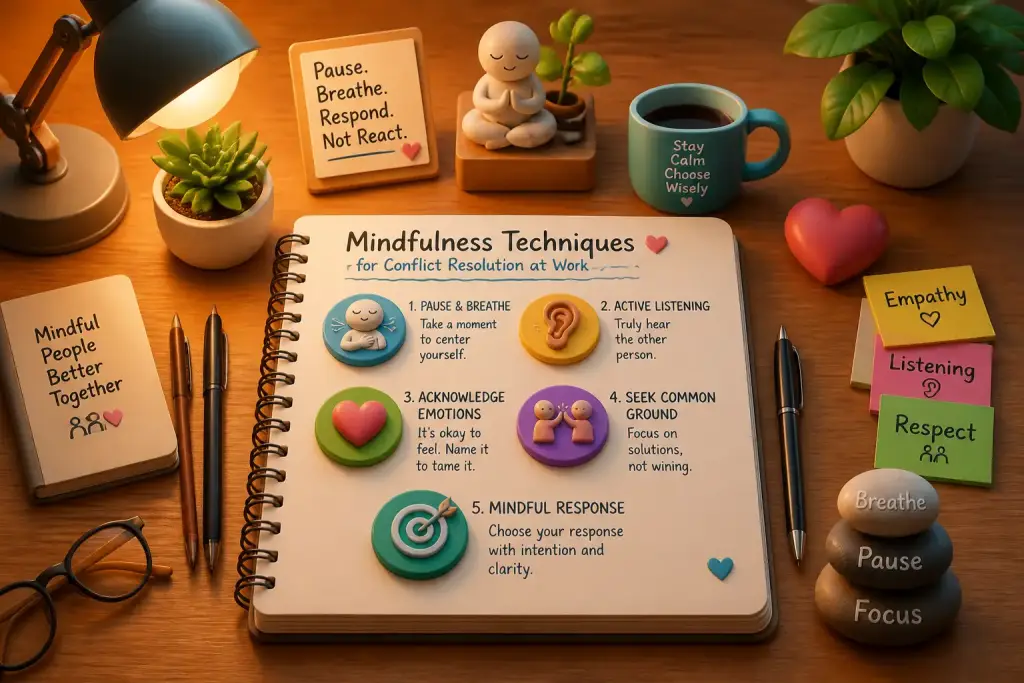
- Mindfulness techniques can significantly enhance conflict resolution skills in the workplace.
- Practicing active listening is a vital mindfulness technique to foster understanding and compassion during conflicts.
- Regular mindfulness practices can lead to reduced stress and increased emotional awareness, improving team dynamics.
To recognize these triggers, pay attention to your own feelings and those of your colleagues. Regularly ask yourself: What situations lead to tension? Keeping a journal can help track these moments and reflect on them. This practice allows you to gain insight into your responses to conflict and may reveal patterns that you can address with mindfulness.
With this awareness, you can prepare yourself mentally for challenging conversations. By acknowledging what can set off conflict, you can approach situations with a calmer mindset. This preparation can lead to more constructive dialogues and fewer misunderstandings.
Practicing Mindfulness Basics
Mindfulness is the practice of being present and fully engaged in the moment without judgment. This can significantly improve your ability to deal with workplace conflicts. Start by finding a quiet space where you can focus. Breathing exercises are a great way to start. Focus on your breath, inhaling deeply and exhaling slowly. This practice helps center your thoughts and brings clarity to your mind.
You can also incorporate mindfulness into your daily routine. For instance, take a few moments before meetings to ground yourself. Close your eyes and focus on your breath. This simple act can help reduce anxiety and make you more receptive during discussions.
Moreover, practicing mindfulness regularly helps develop emotional awareness. By tuning into your feelings, you can respond to conflicts with empathy instead of reacting impulsively. This emotional intelligence fosters a more harmonious workplace environment.
Active Listening Techniques
Active listening is a key mindfulness technique that can transform conflict resolution. It involves fully concentrating, understanding, responding, and remembering what is being said. When you listen actively, you show respect and validate the speaker’s feelings, which can diffuse tensions.
To practice active listening, follow these steps:
- Maintain eye contact to show engagement.
- Use verbal affirmations like “I see” or “I understand” to encourage the speaker.
- Paraphrase what the speaker has said to confirm understanding.
- Ask open-ended questions to encourage further discussion.
For example, if a colleague expresses frustration over a project, instead of jumping to defend your position, listen and reflect on their concerns. This approach not only helps clarify misunderstandings but also fosters a collaborative atmosphere.
Implementing Mindful Breathing
Mindful breathing is a powerful tool for managing conflict. It helps calm your nervous system and promotes clarity of thought. When tensions rise, taking a moment to breathe can make a significant difference.
To practice mindful breathing, follow these steps:
- Find a comfortable position, either sitting or standing.
- Close your eyes and inhale deeply through your nose, filling your lungs.
- Hold your breath for a few seconds.
- Exhale slowly through your mouth, releasing tension.
Try to do this for a few minutes whenever you feel stress. You can even practice mindful breathing during meetings when discussions become heated. This technique will help you remain calm and focused, allowing for more rational decision-making.
Establish a daily mindfulness routine to build resilience and better manage workplace conflicts when they arise.
Emotional Regulation Strategies
Emotional regulation is vital for effective conflict resolution. Mindfulness techniques can help you manage your emotions and react appropriately instead of letting anger or frustration take over. Recognizing your emotional responses allows you to step back and choose how to respond.
One effective strategy is to acknowledge your feelings without judgment. When you feel anger rising during a discussion, pause and identify that emotion. Say to yourself, “I am feeling angry right now.” This simple acknowledgment can reduce the intensity of your feelings, making it easier to engage constructively.
Additionally, consider practicing self-compassion. Instead of being hard on yourself for feeling a certain way, treat yourself with kindness. This approach helps in reducing stress and allows for more balanced reactions during conflicts.
Using Visualization Techniques
Visualization is a practice where you create mental images to guide your responses. This technique can be particularly helpful in preparing for difficult conversations. By visualizing a positive outcome, you can enter the discussion with a constructive mindset.
Before a potentially challenging meeting, take a few moments to visualize a successful discussion. Imagine yourself calmly addressing issues and finding common ground. Picture your colleagues responding positively. This mental rehearsal can help build confidence and reduce anxiety.
For example, if you need to discuss performance issues with a team member, visualize the conversation going smoothly. Imagine both parties expressing their views respectfully. This preparation can lead to more positive interactions and fewer conflicts.
Building Empathy in the Workplace
Empathy is a important component of conflict resolution. Mindfulness techniques can enhance your ability to empathize with colleagues, which can lead to better communication and reduced conflict. When you put yourself in another person’s shoes, you can understand their perspective better.
To cultivate empathy, practice reflecting on others’ feelings. When a colleague is upset, consider what may have led to their emotions. Ask yourself questions like, “How would I feel in their situation?” This reflection can foster a compassionate response.
Additionally, engaging in team-building activities can enhance empathy among coworkers. Sharing experiences outside of work can strengthen bonds and improve understanding. Regularly participating in such activities can lead to a more supportive workplace culture.
Creating a Mindful Work Environment
Fostering a mindful work environment encourages everyone to practice mindfulness techniques. Start by promoting open communication and providing resources for mindfulness training. This approach can help employees feel more comfortable expressing their concerns.
Consider establishing regular mindfulness sessions. These could include guided meditations or workshops on mindful communication. By making mindfulness a part of the workplace culture, you encourage everyone to engage in conflict resolution more effectively.
Furthermore, creating quiet spaces for relaxation can help employees manage stress. Designate areas where staff can take short breaks to practice mindfulness techniques. These small changes can lead to a more harmonious work atmosphere.
Mindfulness Apps and Tools
In today’s digital age, various mindfulness apps can support your journey. These tools offer guided meditations, breathing exercises, and reminders to practice mindfulness throughout the day. Some popular apps include Headspace, Calm, and Insight Timer.
Using these tools can be particularly beneficial for busy professionals. Many apps allow you to set daily reminders, helping you integrate mindfulness into your routine. You can also find specific exercises geared towards reducing workplace stress or improving focus.
For example, if a conflict arises, use your app to take a short break. A quick guided session can help clear your mind and prepare you for a productive discussion. Embracing technology can enhance your mindfulness practice and improve conflict resolution skills.
Reflecting on Conflict Situations
After a conflict, take time to reflect on what occurred. This practice can provide valuable insights into how you handled the situation and what you could improve. Begin by writing down your thoughts about the conflict. Consider questions like: What triggered the conflict? How did I respond? What could I have done differently?
Reflecting in this way allows you to learn from each experience. It helps you recognize patterns in your behavior and develop strategies for future conflicts. Over time, this practice can lead to significant personal growth.
Moreover, sharing your reflections with a trusted colleague can provide additional perspectives. Discussing the situation can also foster a sense of connection and support, which is essential in building a positive work environment.
Long-Term Mindfulness Practice for Continuous Improvement
Mindfulness is not a one-time effort but a continuous journey. Regular practice enhances your skills and improves your ability to handle conflicts over time. Consider setting aside time each week to engage in mindfulness activities. This could involve meditation, yoga, or simply walking in nature. These practices can help maintain your emotional balance.
Additionally, join mindfulness groups or classes to connect with others on a similar journey. Learning from others’ experiences can provide new insights and techniques. Group settings also foster accountability, encouraging you to practice consistently.
In summary, integrating mindfulness into your daily life can lead to significant changes in how you approach conflicts. Through regular practice, you not only improve your conflict resolution skills but also contribute to a healthier workplace environment.

Davide Esposito
Founder & Editor-in-ChiefBorn and raised in Italy, Davide Esposito is the founder and lead editor of Success Mindfulness, combining hands-on research with practical mindful leadership strategies to help readers make informed everyday decisions.