


Table of Contents
- Introducing Mindfulness for Executives
- The Science Behind Mindfulness
- Breathing Techniques for Instant Calm
- Mindful Walking as a Stress Relief Method
- Gratitude Journaling for Mental Clarity
- Mindfulness Meditation: A Deeper Practice
- Mindful Listening for Better Communication
- Body Scan Technique for Physical Awareness
- Building Mindfulness into Daily Routines
- Long-Term Maintenance Tips for Mindfulness
Introducing Mindfulness for Executives
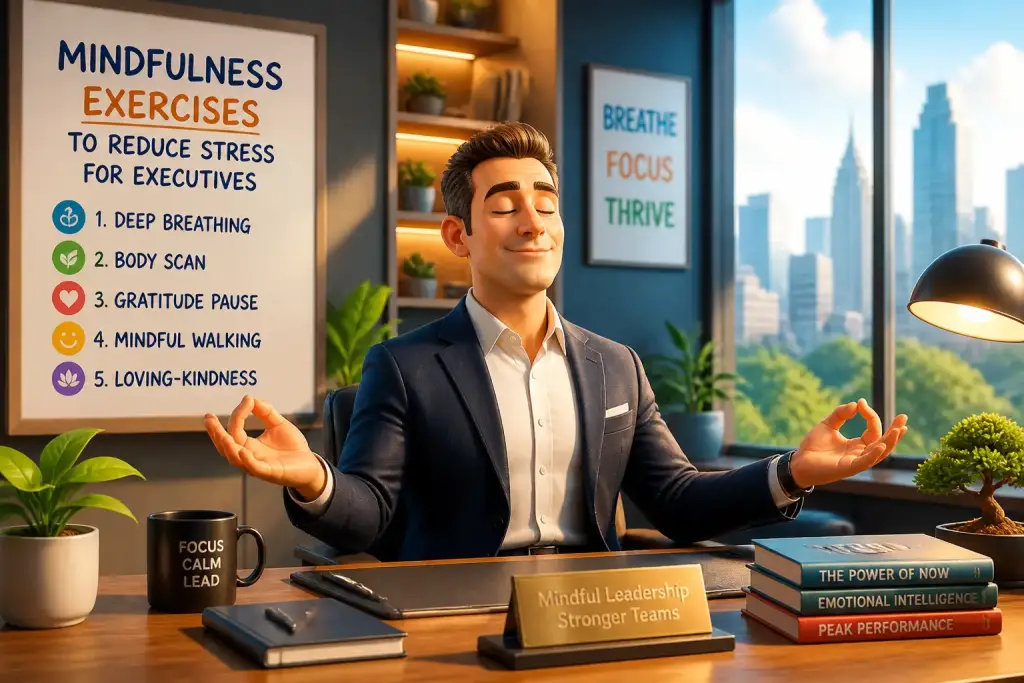
Busy executives often face high levels of stress. Their roles demand swift decision-making, constant communication, and effective problem-solving. Because of this, adopting mindfulness exercises can be a game-changer. These practices not only help reduce stress but also improve focus and clarity. Mindfulness encourages a deep connection with the present moment, allowing executives to manage their workload more effectively. In this article, we will explore various mindfulness exercises tailored for busy professionals in leadership roles.
- Mindfulness can significantly lower stress levels for busy executives.
- Practicing gratitude and self-awareness is essential for mental clarity.
- Simple breathing techniques can improve focus and decision-making.
The Science Behind Mindfulness
Understanding the science behind mindfulness is essential. Studies show that practicing mindfulness can lead to reduced stress levels and improved emotional regulation. When individuals engage in mindfulness exercises, they activate the parasympathetic nervous system. This activation helps lower heart rates and promotes relaxation. Research has also demonstrated that mindfulness can enhance cognitive functions, such as attention and memory, which are important for executives.
Additionally, mindfulness practices can change brain structure. Regular meditation increases the thickness of the prefrontal cortex. This area is responsible for complex thinking and decision-making. Therefore, incorporating mindfulness into daily routines not only helps manage stress but also sharpens executive skills.
Breathing Techniques for Instant Calm
Breathing exercises are a straightforward way to achieve mindfulness. Simple techniques can be done anywhere, making them ideal for busy executives. One effective method is the 4-7-8 technique. Here’s how it works:
- Inhale deeply through your nose for a count of 4.
- Hold your breath for a count of 7.
- Exhale slowly through your mouth for a count of 8.
Repeat this cycle four times. This technique calms the nervous system and helps reduce anxiety. Executives can use it before meetings or during stressful moments. Another beneficial technique is diaphragmatic breathing, which involves deep belly breathing. This method engages the diaphragm, promoting full oxygen exchange and leading to a sense of relaxation.
Mindful Walking as a Stress Relief Method
Walking is a natural way to incorporate mindfulness into daily routines. Mindful walking involves paying attention to the sensations of walking. As you move, focus on your feet touching the ground. Notice how your body feels with each step. Executives can practice this during a break or while commuting.
Steps to Practice Mindful Walking
- Begin by standing still for a moment, taking a few deep breaths.
- Start walking slowly, paying attention to the movement of your legs and feet.
- Observe your surroundings without judgment.
- Notice sounds, smells, and sights as you walk.
This practice helps clear the mind and can lead to increased creativity. Mindful walking also provides a break from screens and meetings, allowing for rest and rejuvenation.
Set aside ten minutes each day for mindfulness practice to cultivate a stress-free mindset over time.
Gratitude Journaling for Mental Clarity
Gratitude journaling is a powerful mindfulness exercise. Taking time to reflect on what you are thankful for can shift your mindset. Regular gratitude practice can lead to improved mood and reduced stress. Executives can dedicate a few minutes each day to write down three things they appreciate.
To start, select a time of day that works best. You might do this during a morning routine or before bed. Write about specific experiences, people, or accomplishments. This practice helps cultivate a positive outlook and can improve resilience in challenging situations.
Mindfulness Meditation: A Deeper Practice
Mindfulness meditation is one of the most effective methods for stress reduction. It involves sitting quietly and focusing on your breath or a specific thought. This practice allows you to observe your thoughts without judgment. Over time, it helps in developing a greater awareness of your mental patterns.
To practice mindfulness meditation, find a quiet space. Sit comfortably with your back straight. Close your eyes and take a few deep breaths. Focus on each inhale and exhale. When your mind wanders, gently redirect your attention back to your breath. Start with five minutes and gradually increase the duration as you become more comfortable.
Tips for Effective Meditation
- Choose a comfortable position.
- Set a timer for your desired length.
- Practice regularly for better results.
Integrating meditation into your daily routine can lead to long-term benefits, including greater emotional resilience and improved focus.
Mindful Listening for Better Communication
Effective communication is vital for executives. Mindful listening is a skill that enhances this ability. It involves fully concentrating on the speaker without forming immediate responses. This practice helps improve relationships and reduces miscommunication.
To practice mindful listening, focus entirely on the person speaking. Avoid distractions like phones or emails. Show engagement through body language, such as nodding or maintaining eye contact. After the speaker finishes, wait a moment before responding. This pause allows you to process the information fully. Practicing this skill can lead to more productive conversations and stronger team dynamics.
Body Scan Technique for Physical Awareness
The body scan technique is a mindfulness exercise that promotes physical awareness. It involves mentally scanning your body from head to toe, noticing any areas of tension or discomfort. This can be especially beneficial for executives who often carry stress in their bodies.
To perform a body scan, lie down or sit comfortably. Close your eyes and take a few deep breaths. Starting from your toes, focus on each part of your body in turn. Notice how each area feels, from sensations to tension. If you find tightness, breathe into that area and consciously relax it. This technique can help release physical stress and promote overall well-being.
Building Mindfulness into Daily Routines
Incorporating mindfulness into daily life can be straightforward. One effective way is to choose specific moments throughout the day. These could be during meetings, while eating, or even while driving. Mindfulness can also be integrated into existing routines. For example, take a moment to breathe deeply before entering a meeting.
Another approach is to set reminders for mindfulness breaks. Use your phone or calendar to create alerts. These reminders can prompt you to pause, breathe, and refocus. Executives can use these short breaks to practice any of the exercises discussed, enhancing overall productivity and reducing stress.
Long-Term Maintenance Tips for Mindfulness
To truly benefit from mindfulness, consistency is key. Establishing a routine helps reinforce these practices. Start small, committing to just a few minutes each day. Over time, gradually increase the duration and frequency of your mindfulness exercises.
Join mindfulness groups or workshops to stay motivated. Engaging with others can provide support and new techniques. Online resources and apps are also available, offering guided meditations and reminders.
Finally, be patient with yourself. Mindfulness is a journey, and it takes time to develop. Celebrate small victories along the way. Whether it is feeling less stressed or noticing improved focus, each step contributes to your overall mental well-being.

Davide Esposito
Founder & Editor-in-ChiefBorn and raised in Italy, Davide Esposito is the founder and lead editor of Success Mindfulness, combining hands-on research with practical mindful leadership strategies to help readers make informed everyday decisions.