









Recognizing the Importance of Emotional Intelligence
Emotional intelligence, often shortened to EI, plays a vital role in professional growth and success. Today, many employers prioritize this skill when hiring new staff. Unlike technical skills that can be taught, emotional intelligence encompasses personal qualities that influence how we interact with others. This includes our ability to understand our emotions, recognize the emotions of others, and manage these feelings effectively in various situations.
- Emotional intelligence helps in understanding and managing emotions, leading to better workplace relationships.
- Effective communication is a key component of emotional intelligence, improving team dynamics and collaboration.
- Practicing empathy can significantly enhance your connections with colleagues and clients, building a supportive work environment.
Building emotional intelligence can enhance your career connections significantly. For instance, a manager with high EI can create a more positive work environment, which boosts team morale and productivity. Employees who are emotionally intelligent are better at resolving conflicts, collaborating on projects, and adapting to change. They also tend to have stronger relationships with clients, leading to better customer satisfaction and loyalty.
Employers today seek individuals who not only have the right qualifications but also possess strong emotional intelligence. This ability to connect with others on an emotional level can set you apart in a competitive job market. Understanding how to develop emotional intelligence is essential for anyone looking to advance their career.
Components of Emotional Intelligence
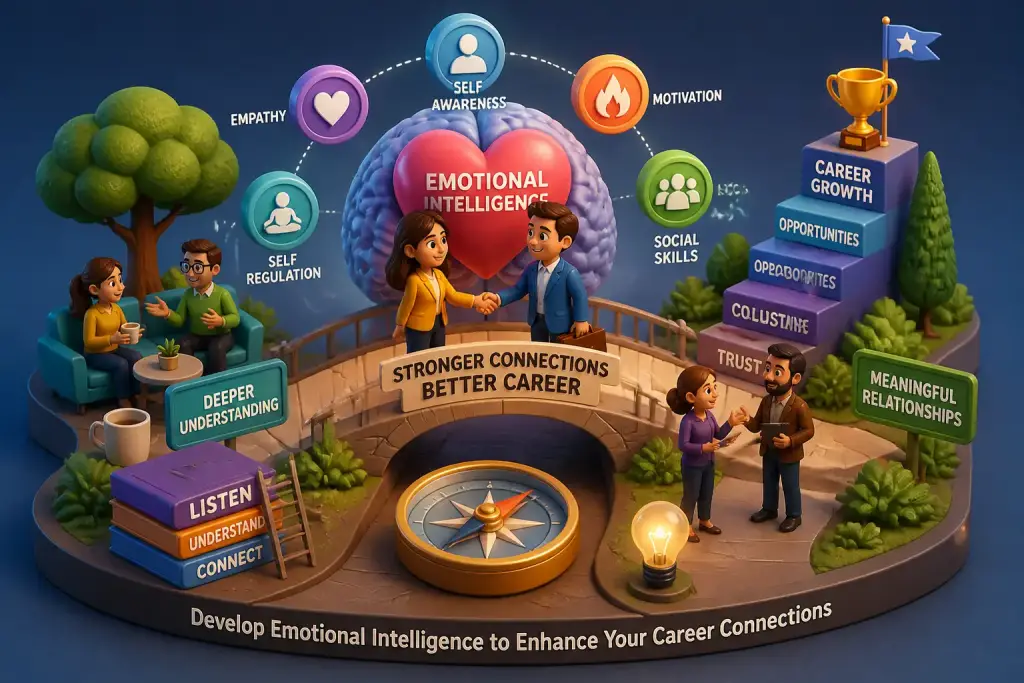
Emotional intelligence consists of several key components. Understanding these elements is the first step in developing EI. The five main components include:
- Self-awareness: Recognizing your emotions and their impact on your thoughts and behavior.
- Self-regulation: The ability to manage your emotions, especially in stressful situations.
- Motivation: A drive to achieve personal and professional goals, often fueled by intrinsic motivation.
- Empathy: The capacity to understand and share the feelings of others.
- Social skills: Proficiency in managing relationships and building networks.
Each component plays a significant role in enhancing your relationships at work. For instance, self-awareness allows you to understand how your emotions affect your interactions. Self-regulation helps you respond calmly during conflicts. Motivation drives you to pursue your goals, while empathy enables you to connect with others on a deeper level. Social skills allow you to communicate effectively and resolve issues constructively.
How to Develop Self-Awareness
Self-awareness is the foundation of emotional intelligence. It involves recognizing and understanding your emotions, strengths, weaknesses, and triggers. Developing self-awareness can be achieved through several practical steps:
- Journaling: Write about your daily experiences and emotions. This practice helps you identify patterns in your feelings and reactions.
- Feedback: Seek feedback from coworkers or mentors to gain perspective on how others perceive you.
- Mindfulness: Practice mindfulness techniques, such as meditation or deep breathing, to enhance your focus on the present moment and your emotional state.
By becoming more self-aware, you can make better decisions and improve your interactions with others. For instance, understanding your emotional triggers can help you manage stress and respond more effectively in challenging situations.
Mastering Self-Regulation Techniques
Self-regulation is about managing your emotions and behaviors. It is important for maintaining control in difficult situations. Here are some effective techniques to enhance your self-regulation skills:
- Pause before reacting: When faced with a challenging situation, take a moment to breathe and reflect before responding.
- Develop coping strategies: Identify healthy ways to cope with stress, such as physical exercise or creative outlets.
- Set personal boundaries: Learn to say no when necessary and avoid overcommitting yourself.
Practicing self-regulation can lead to improved decision-making and better relationships at work. For example, managing your emotions during a disagreement can help maintain a professional atmosphere and facilitate constructive dialogue.
Regularly engage in self-reflection to understand your emotional responses and improve your emotional intelligence over time.
Boosting Motivation for Success
Intrinsic motivation drives you to pursue your goals and achieve success. Cultivating this motivation involves several strategies:
- Set clear goals: Define specific, measurable goals that inspire you to take action.
- Celebrate achievements: Acknowledge your progress and celebrate small victories along the way.
- Stay positive: Maintain a positive outlook, even when faced with challenges. Focus on what you can learn from setbacks.
By boosting your motivation, you can enhance your performance and inspire those around you. For instance, a motivated team member can influence others, creating a more productive work environment.
Practicing Empathy in the Workplace
Empathy is a critical aspect of emotional intelligence that builds strong connections with colleagues and clients. Here are some ways to practice empathy:
- Active listening: Pay full attention when others speak, showing genuine interest in their thoughts and feelings.
- Ask questions: Engage others in conversation by asking open-ended questions that encourage sharing.
- Validate feelings: Acknowledge the emotions of others, even if you do not necessarily agree with their perspective.
By practicing empathy, you can build trust and strengthen relationships. For example, understanding a coworker’s challenges can lead to collaboration and a supportive atmosphere, ultimately benefiting the entire team.
Enhancing Social Skills
Strong social skills are essential for effective communication and relationship-building in the workplace. Here are some tips to enhance your social skills:
- Practice effective communication: Be clear and concise when expressing your thoughts. Use positive body language to convey openness and confidence.
- Network: Attend industry events and engage with colleagues to expand your professional network.
- Resolve conflicts promptly: Address issues as they arise, using constructive communication to find solutions.
Improving your social skills can lead to better teamwork and collaboration. For instance, effectively communicating with a cross-functional team can result in smoother project execution and positive outcomes.
The Role of Emotional Intelligence in Leadership
Emotional intelligence is a vital trait for effective leadership. Leaders with high EI can inspire and motivate their teams. They understand how to manage their own emotions and those of their team members. Here are some ways emotional intelligence enhances leadership:
- Building strong relationships: Leaders with high EI build trust and collaboration among team members.
- Encouraging open communication: Emotionally intelligent leaders create an atmosphere where team members feel comfortable sharing ideas and concerns.
- Adapting to change: Leaders with EI are more flexible and can manage changes effectively, guiding their teams through uncertainty.
For example, a leader who recognizes team members’ emotional states can adjust their management style to better support their needs, leading to increased morale and productivity.
Emotional Intelligence in Remote Work Environments
As remote work becomes more common, developing emotional intelligence is important for maintaining connections with colleagues. Here are some strategies for practicing EI while working remotely:
- Schedule regular check-ins: Set up virtual meetings to connect with your team and discuss any concerns or updates.
- Use video calls: Whenever possible, use video calls instead of emails or chats to facilitate face-to-face interactions.
- Be mindful of tone: Pay attention to your tone in written communications, as it can sometimes be misinterpreted.
By applying emotional intelligence in remote work settings, you can build strong relationships and maintain team cohesion, even when working from different locations.
Long-Term Maintenance Tips for Emotional Intelligence
Developing emotional intelligence is an ongoing process that requires consistent effort. Here are some tips for maintaining and enhancing your EI over time:
- Continue learning: Stay updated on emotional intelligence research and practices to deepen your understanding.
- Seek feedback: Regularly ask for feedback from peers and mentors to assess your emotional intelligence growth.
- Practice self-reflection: Take time to reflect on your interactions and emotions, identifying areas for improvement.
By committing to these practices, you can ensure that your emotional intelligence continues to grow, positively impacting your career and relationships. Remember, emotional intelligence is not a one-time effort but a lifelong journey that can lead to greater success and fulfillment.

Arianna Fontana
Founder & Editor-in-ChiefOriginally from Italy, Arianna Fontana is the publisher and senior editor behind Top Success Way, dedicated to strategic analysis and real-world case studies and realistic retiree career inspiration solutions.