









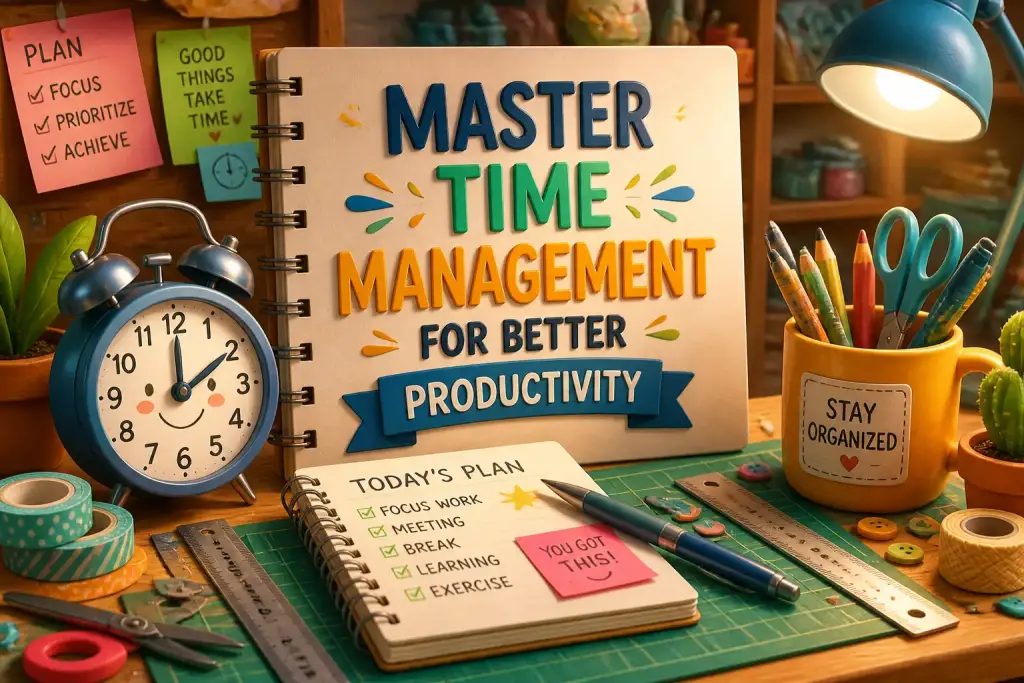
Set Clear Goals for Effective Time Management
Establishing clear goals is a fundamental first step in mastering time management. Well-defined objectives provide direction and focus. Without specific goals, it becomes easy to lose sight of priorities. Consider using the SMART criteria: goals should be Specific, Measurable, Achievable, Relevant, and Time-bound. For example, instead of saying, “I want to get fit,” say, “I will exercise for 30 minutes, five times a week.” This clarity helps in creating actionable plans.
- Prioritize tasks using the Eisenhower Matrix for better focus and efficiency.
- Implement time-blocking techniques to enhance concentration and minimize distractions.
- Regularly review and adjust your productivity strategies to ensure continuous improvement.
Once you have your goals, write them down. This simple act commits them to memory and makes them feel more tangible. Review these goals regularly to ensure they remain aligned with your evolving priorities. Adjust them as necessary to stay on track. This practice will keep you motivated and accountable.
Finally, break down larger goals into smaller, manageable tasks. For instance, if your goal is to write a book, start with the objective of drafting a chapter per week. This method makes daunting tasks feel more achievable and helps maintain momentum.
Prioritize Using the Eisenhower Matrix
The Eisenhower Matrix is a powerful tool for prioritizing tasks based on urgency and importance. By categorizing tasks into four quadrants, you can decide what to focus on. The four quadrants are:
- Urgent and Important: Tasks that require immediate attention. Do these first.
- Important but Not Urgent: Tasks that are essential but can wait. Schedule these tasks.
- Urgent but Not Important: Tasks that need quick action but are not critical. Delegate these if possible.
- Not Urgent and Not Important: Tasks that do not contribute significantly to your goals. Eliminate or minimize these activities.
By regularly assessing your tasks with this framework, you can enhance your focus on what truly matters. This clarity helps in reducing stress and increasing productivity. Prioritizing tasks effectively allows you to spend your time wisely and achieve your goals.
Implement Time-Blocking Techniques
Time-blocking is an effective strategy for managing your day. This method involves dividing your day into specific time slots dedicated to various tasks. Start by identifying your most productive hours and allocate these times for your most important tasks. For instance, if you work best in the morning, block that time for high-priority projects.
Begin by creating a daily schedule. Use a planner or digital calendar to mark out your time blocks. Assign each block to a specific task. For example, you might allocate 9 AM to 10 AM for emails, 10 AM to 12 PM for project work, and 1 PM to 2 PM for meetings. This structured approach helps eliminate distractions and keeps you focused on one task at a time.
Be sure to include breaks in your schedule. Short breaks can enhance your focus and creativity. Try the Pomodoro Technique, where you work for 25 minutes, then take a 5-minute break. This rhythm helps maintain energy levels throughout the day.
Use a timer to work in focused bursts, like the Pomodoro Technique, to maintain energy and focus throughout the day.
Limit Distractions for Better Focus
Distractions are a significant barrier to effective time management. Identifying and limiting these distractions is important for improving focus. Start by recognizing your common distractions. These could be notifications from your phone, social media, or even noisy environments.
Once you identify your distractions, take steps to minimize them. For instance, silence your phone during work hours or use apps that block distracting websites. Creating a dedicated workspace can also help. A quiet, organized environment promotes concentration and productivity.
Consider using techniques like the two-minute rule. If a task takes less than two minutes, do it immediately. This simple strategy helps keep your workflow uninterrupted and reduces the number of small tasks that can pile up over time.
Utilize Technology for Enhanced Productivity
Technology offers many tools to support effective time management. Application tools like Trello, Asana, and Todoist help in organizing tasks and tracking progress. These platforms allow you to set deadlines, assign tasks, and collaborate with others efficiently.
Using calendar applications helps in scheduling tasks and setting reminders. Google Calendar or Outlook can notify you of approaching deadlines and meetings. Automating repetitive tasks can save time and reduce manual errors. For instance, tools like Zapier allow you to connect different applications and automate workflows.
Consider leveraging focus apps like Forest or Focus@Will. These tools help you stay on task by creating an environment conducive to productivity. By integrating technology into your time management strategy, you can streamline processes and enhance your efficiency.
Practice Regular Review and Reflection
Regularly reviewing your time management strategies is essential for continuous improvement. Set aside time weekly to reflect on what worked and what didn’t. Consider questions like: Did I achieve my goals? What tasks consumed more time than expected? Did I allow distractions to impact my productivity?
This reflection helps you identify patterns in your productivity. Adjust your strategies based on these insights. If you find certain tasks consistently take longer, consider breaking them into smaller steps or delegating. This practice encourages a growth mindset, allowing you to adapt and refine your approach.
Celebrating small wins is vital. Recognizing achievements, no matter how small, boosts motivation and reinforces positive habits. Acknowledge your progress and use it as fuel for future tasks.
Develop Healthy Work-Life Balance
A healthy work-life balance is critical for long-term productivity. Overworking can lead to burnout, which negatively impacts focus and efficiency. Therefore, it’s essential to set boundaries between work and personal life. Designate specific work hours and stick to them. After work hours, engage in activities you enjoy or spend time with loved ones.
Incorporating leisure activities into your schedule is important. This could be exercising, reading, or pursuing hobbies. Regular breaks and time off help recharge your mind. Studies show that taking breaks can enhance creativity and problem-solving skills.
Remember to prioritize self-care in your routine. Adequate sleep, a balanced diet, and regular exercise are fundamental for maintaining energy levels and mental clarity. A well-rounded approach to health will support your productivity in every area of life.
Set Boundaries to Protect Your Time
Establishing boundaries is vital for effective time management. Learning to say no is an important skill. Many people struggle with this, often taking on more than they can handle. Evaluate requests before agreeing. If a task does not align with your goals or priorities, it’s okay to decline politely.
Communicate your boundaries clearly. Let colleagues, friends, and family know your work hours and when you are available. This helps manage expectations and reduces interruptions during focused work time.
Respect your own boundaries. If you’ve set aside time for a specific task, protect that time. Avoid letting minor distractions or last-minute requests sidetrack your focus. This consistency reinforces your commitment to effective time management.
Learn to Delegate Effectively
Delegation is a critical skill for maximizing productivity. Many people hesitate to delegate out of fear that tasks won’t be done correctly. However, delegating effectively can free up your time for more important responsibilities. Identify tasks that others can handle, allowing you to focus on high-priority projects.
Start by assessing your workload. Determine which tasks are essential for you to complete and which can be delegated. Communicate clearly when assigning tasks. Provide all necessary information and set clear expectations. This ensures that the person taking over understands the task fully.
Trust your team and follow up on progress without micromanaging. Offer support and guidance as needed but allow others to take ownership. This builds trust and builds a collaborative work environment. Over time, delegation can lead to improved team performance and greater overall productivity.
Adopt a Flexible Mindset
Flexibility is essential in time management. Unexpected events can disrupt even the best-laid plans. Embracing a flexible mindset allows you to adapt to changes without losing productivity. Instead of stressing over unplanned interruptions, view them as opportunities to learn and adjust.
When faced with obstacles, reassess your priorities. Maybe a sudden meeting has taken the place of your scheduled work time. Quickly determine what tasks can wait or be rescheduled. This adaptability helps maintain progress even when plans change.
Keep a backup plan ready. If a task doesn’t go as planned, have alternative strategies in place. This could involve shifting tasks around or utilizing different tools to keep you on track. A flexible approach ensures that you can manage challenges while still achieving your goals.
Common Mistakes to Avoid in Time Management
Even with the best strategies, mistakes can hinder effective time management. Recognizing these common pitfalls can help you avoid them. One major mistake is failing to plan ahead. Without a clear plan, tasks can pile up, leading to stress and inefficiency.
Another common error is multitasking. While it may seem productive, multitasking can actually reduce focus and increase errors. Focus on completing one task at a time for better results. Lastly, neglecting to take breaks is a mistake many make. Breaks are essential for maintaining energy and focus. Regular intervals can enhance productivity and creativity.
By being aware of these mistakes, you can adjust your approach and enhance your time management skills. Regularly evaluate your practices to identify areas for improvement. This proactive mindset will lead to better outcomes in your work and personal life.

Arianna Fontana
Founder & Editor-in-ChiefOriginally from Italy, Arianna Fontana is the publisher and senior editor behind Top Success Way, dedicated to strategic analysis and real-world case studies and realistic retiree career inspiration solutions.